• Compassion for every patient. Care in every moment.

What is Dialysis?

When kidneys stop doing their job properly, waste and extra fluid start building up in the blood, and that's where dialysis steps in. It takes over that filtering role, clearing out waste products, extra salt, excess fluid, keeping blood pressure under control and the body's chemical balance where it needs to be. For patients living with chronic kidney disease, or dealing with a sudden kidney injury, it's often what keeps things stable.
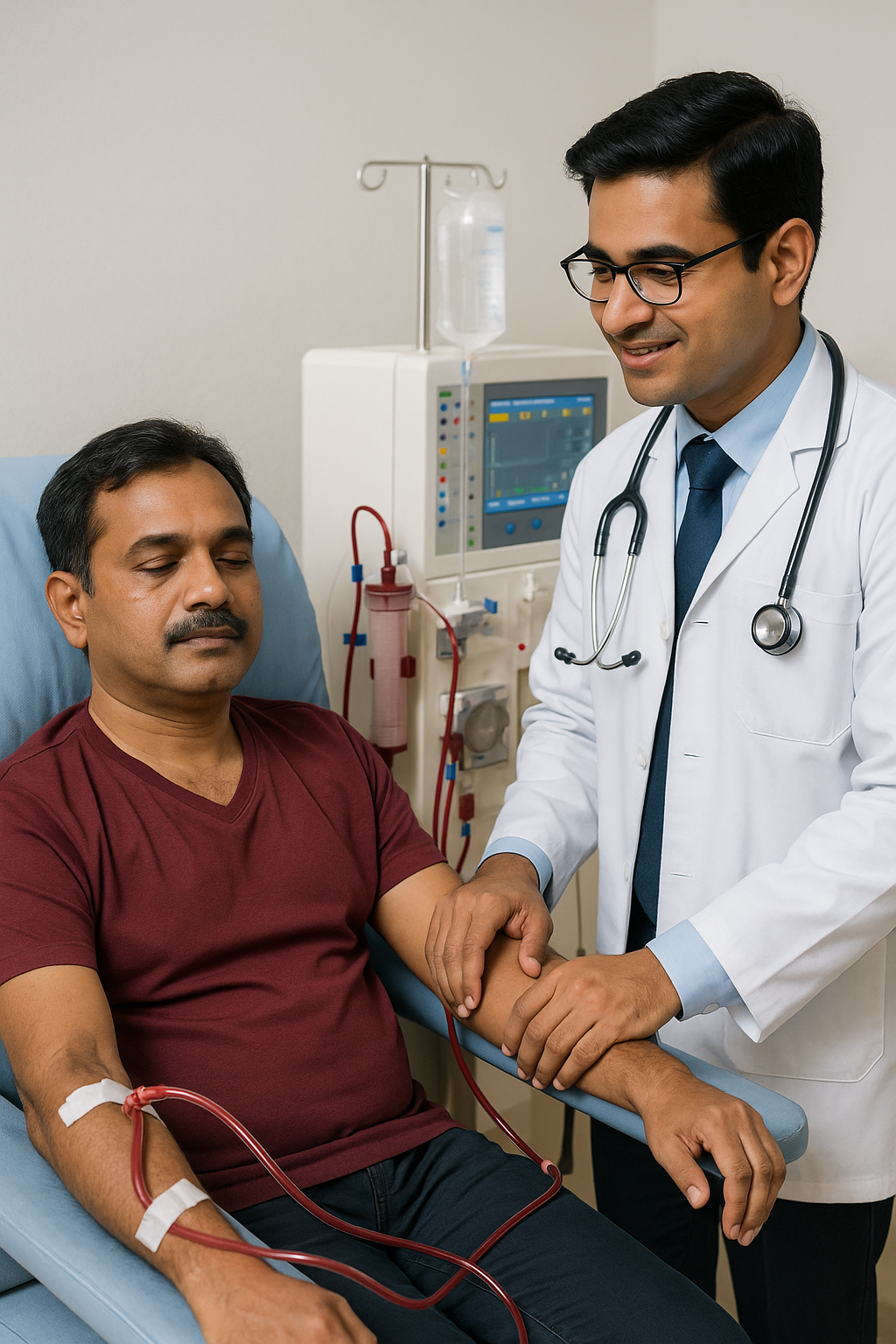
Advanced dialysis treatment and comprehensive kidney care provided by experienced nephrologists at Mallige Hospital, a trusted Dialysis Hospital in Bangalore.

Advanced Renal Replacement Therapy

Dialysis

Safe, comfortable, backed by real evidence, that's the approach our Dialysis Unit takes. Modern machines, strict infection control, a nephrologist keeping an eye on things throughout, nothing here is left to guesswork. Every plan gets built around the actual patient, their medical needs, their day to day life, not some generic template applied to everyone.

Hemodialysis, peritoneal dialysis training and support, emergency dialysis for when things can't wait, guidance on vascular access whether that's an AV fistula, a graft, or a catheter, we've got it covered. And behind all of that, a dedicated nursing team plus on-site diagnostics work together so care doesn't feel disjointed from one visit to the next.

For most patients dialysis isn't a one-off thing, it becomes part of regular life, sometimes for years. We get that, so we try to keep every session familiar, same team, same faces, less of that unsettling feeling that can come with ongoing treatment.

Key Services

Haemodialysis (HD)

Peritoneal Dialysis (PD) Support

Emergency Dialysis

AV Fistula/Graft Care

Dialysis Catheter Care

Infection Control Protocols

Anaemia & Bone Health Management

Dietary & Fluid Counselling

Meet Our Specialists

FAQs

Chronic kidney disease that's progressed too far, or a sudden kidney injury, either one can bring you to this point, when the kidneys just stop clearing waste and fluid the way they should. Your nephrologist is the one who makes that call, based on your labs and how things are actually looking for you.

Roughly 4 hours, give or take, and most people are in 2 to 3 times a week. Your exact schedule though, that comes down to your prescription and whatever your lab results are showing at the time.

No, not the treatment itself. There's a quick pinch when the needle goes in for hemodialysis, that's really it. Beyond that, our team's watching closely the whole session, comfort's the priority.

ID, recent prescriptions, lab reports, a list of your current meds, and something comfortable to wear. And whatever fluid or diet advice your nephrologist or dietitian already gave you, stick with that too.

Light meal, sure, that's usually fine. Just skip anything heavy or overly salty. Everyone's plan looks a bit different here though, so go with what your renal dietitian's actually told you.

Call the central helpline, walk into the help desk, or book online, whichever's easiest for you. From there our team sorts out the time slots and walks you through what to prepare beforehand.

It's the connection point between you and the dialysis machine, could be an AV fistula, a graft, or a catheter. Sounds technical, but it matters a lot in practice, since a well-maintained access point means smoother, safer sessions, so we keep a close eye on it over time.

To some degree, yeah. Scheduling shifts around session days, diet and fluid intake need some rethinking too. Feels like a lot in the beginning, most patients say it settles into a rhythm after a few weeks though.

You can, it just needs some planning first. Sessions have to be arranged wherever you're headed, ahead of time, so talk to your nephrologist before booking anything so it all lines up properly.

Swelling that doesn't feel normal, breathlessness, fatigue that lingers, shifts in your lab numbers between sessions, these are worth mentioning. Don't sit on it either, flagging it early to your care team means they can adjust things before it becomes a bigger issue.

Could not find what you are looking for?

Request a Callback